

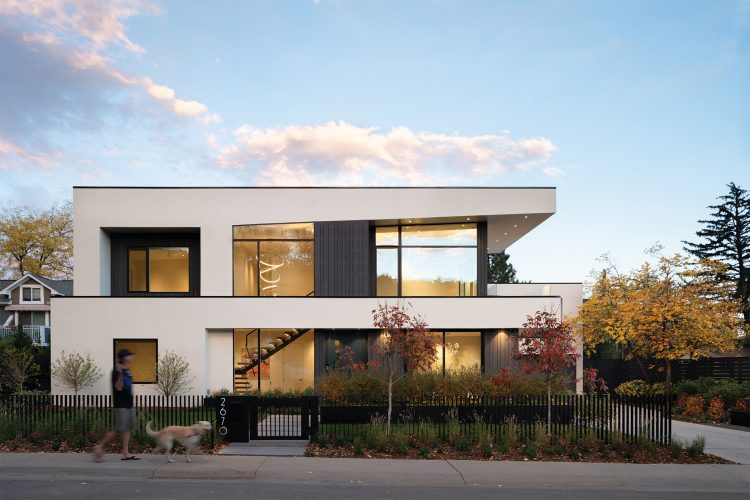
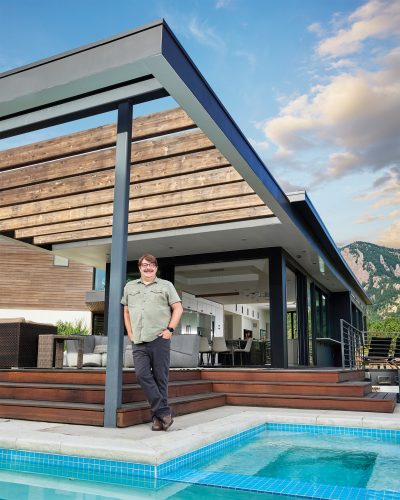
Chris Gray and Steven Perce met while in graduate school at the University of Colorado Boulder and founded bldg.collective, a Boulder-based firm that provides architectural and interior design services for the high-end residential market, in 2009. Here, Gray shares his thoughts on creating great relationships with clients and the evolution of design and architecture in Boulder and the Front Range.
You launched bldg.collective during the 2009 economic downturn. How did that shape your philosophy and business?
We decided to start then because the projects that we had been working on at other firms had gone away or never got started. So, it was a good time to try to create some of our own projects. There wasn’t a lot happening, so we had to take whatever projects we could get, whether it was a garage addition or a kitchen remodel. It wasn’t particularly sexy projects or ones we would have loved to have had, but we did have to put our egos aside and realize that this was where we were at in our young firm’s career. We had to build off of something.
So, I think one thing we took from that is we really do try to take ego out of the architect and client relationship, and we’ve always felt like we’re not necessarily the artists that some people think of architects as being. We’re really professional service providers with a creative outcome, so we always saw our firm as pairing high-quality design with that professional service component. One part of that professional service component is listening to our clients and a client-centric process and then also paying a lot of attention to their budgets and timelines. During that economic down period, every project had an even tighter project budget and timeline than normal. So, we had to follow those principles pretty closely, and we’ve stuck with those as projects have gotten bigger and more complex and more costly.


What makes for a truly productive architect-client relationship?
Trust, transparency, and communication—those are three things that come to mind. We really appreciate when a client trusts our experience and knowledge and lets us do what we’re good at.
Transparency comes really closely with communication, and that is just really being transparent about the design process and how architecture works, which is a mystery to a lot of people. A lot of people don’t really even know what an architect does on a day-to-day basis. So, we like to keep people informed and make sure they can see behind the curtain when they’re interested in that.
That flows right into communication. We want clear communication and transparency when it comes to a customer’s wants and needs and what their budget is. We can design towards a budget, so if it’s a real number, we can work with it. That makes our job a lot easier. We’re not out to spend every last penny that you have, but we’re here to coach you on how to spend the money or the investment in a property.
I also think clear expectations is a really important one. A lot of people have a beer budget and champagne taste. And we have to be really upfront and clear about what a client can get for their budget, and sometimes we have to be the bearer of bad news, but I think in the end it provides a better process because there’s been an upfront conversation about what level of expectations they have for us and we have for them.
What factors make Boulder resilient for custom residential design when other markets are faltering?
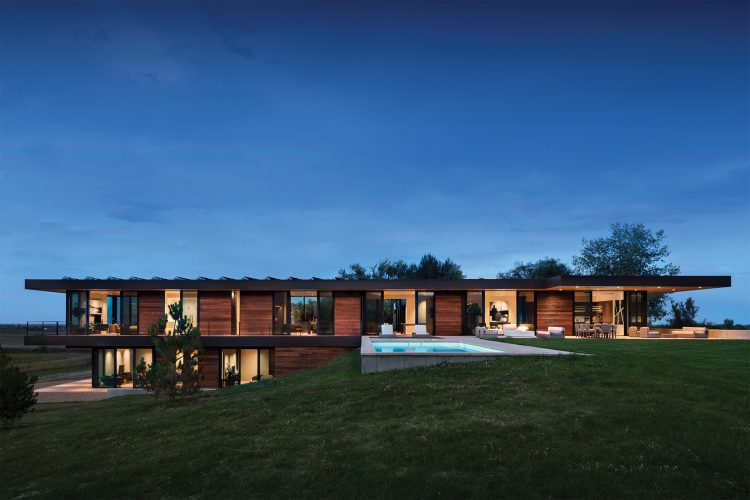
It’s a very desirable place to live, so people will always want to move here. We’ve found a lot of people who are in younger retirement age and would prefer to be in an active community like Boulder with good weather. It’s kind of in the middle of the country when it comes to coast to coast, so traveling is easy. During the pandemic, obviously, we saw a big influx of people, but there was always that desire for Boulder before and after it. I think it will probably continue.
Having been part of the Colorado design community for over twenty years, how have you seen the Front Range’s architectural identity evolve?
As more people have come in from other cities, mostly coastal cities—California and New York—they’ve brought a more sophisticated level of design. They seem to be bringing in other influences than what maybe has been a Colorado aesthetic, wanting things that are different than the typical Colorado mountain home—things that are a little more modern and don’t necessarily have the stone and brick materials, things that are a little bit fresher and new.
We’ve always had a really strong focus on energy efficiency, and that has continued to be elevated year over year. And in the last handful of years, there’s been a real focus on resiliency to wildfires and other weather events, so that’s something that we’re continuing to work on—things that twenty years ago, we might not have built into every house, but now it seems pretty commonplace.
What emerging building technologies are exciting you most right now?
Building technologies are sometimes slow to emerge and to really gain a foothold. But some of the mechanical system technologies, like heat pumps, that allow for all-electric homes—now we can even heat pools with them. In the energy-efficiency and home-conditioning sector, there have been many improvements that I think are pretty exciting.
There are some really interesting things happening with lighting systems and lighting technology with LEDs, and being able to control basically every fixture independently, being able to control the color temperature of the light, and allow it to change during the day and mimic the sun.
On the exterior, we deal with a lot of energy-efficient window systems that allow for really large pieces of glass, which is obviously desirable here, that are also energy efficient and provide a lot of comfort for the home. So, some spaces where we used to have a lot of glass, where it might feel cold in winter or warm in the summer, can now be much more temperature-controlled but still allow the view and all the light that we love so much here in Colorado.
For print-exclusive stories, download the digital magazine or pick up a copy from select local King Soopers, Safeway, Tattered Cover, or Barnes & Noble locations.