On the surface, it doesn’t seem like medical research and indoor plantscapes have much in common. But the combo makes perfect sense to Rebecca Bakke.
Bakke was a medical scientist until 2018, when she launched Bloom & Flourish, a Denver-based interior plant design company that specializes in biophilic design.
Biophilia is a scientific term that describes a human connection with nature. “Up until about 200 years ago, the majority of us used to live in rural settings, so our bodies are kind of hard wired to love nature,” Bakke says. But as we’ve increasingly moved both our homes and our work to cities, that connection has been lost.
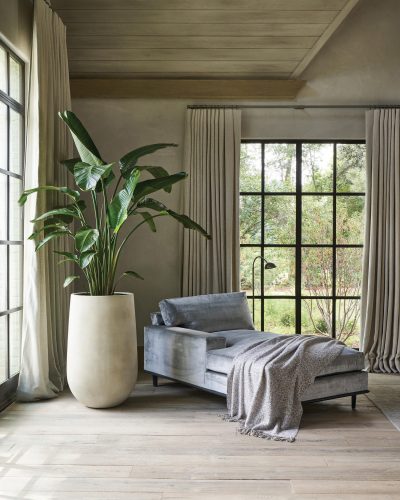
Indoor plants are an important part of biophilic design, but there’s an art to incorporating greenery into your home. Simply plopping a fern or philodendron in front of your living room window doesn’t fulfill the biophilic ideal of making plants an integral part of your interior environment. Instead, Bakke suggests the following:
1Group plants together
Rather than scattering plants individually around your house, place three plants of different heights together, like a wide, big-leafed monstera, a tall mahogany tree, and a trailing pothos. Or put mini groupings of 6-inch plants on a table or chest. “You want to create a vignette,” Bakke says. Groupings can also incorporate artificial plants. “If you have a replica plant next to live plants, most people can’t tell which is the replica,” she says.
2Vary your planters
Bakke recommends plant containers with natural finishes, like stone, wood, or even lined rattan baskets. “Mix textures and sizes,” she says. “And you don’t have to match your containers.”
3Go vertical
Don’t forget walls and ceilings when adding plants to your home. Living walls are an option, but Bakke says they’re expensive to install and maintain. An easier, cheaper alternative is to use wall sconces filled with trailing plants like pothos. “They require water but are easycare and can grow in low light,” she says. Another option is to hang trios of plants from the ceiling at different heights. You can also string aircraft cable from floor to ceiling and train your plants to trail up or down the cable.
Finally, if you feel cursed with a brown thumb, Bakke suggests starting with easy-care varieties like snake plants or ZZ plants. “They can grow in either low light or high light, and they need very little water,” she says.