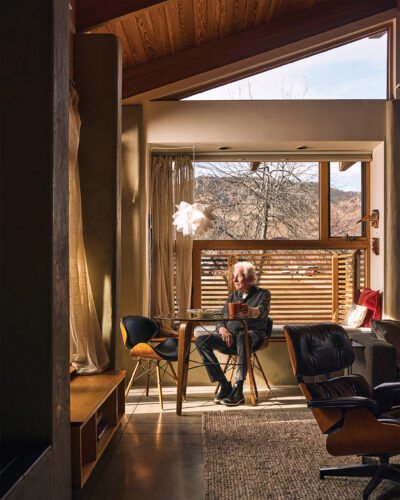
After nearly fifty years of practice, architect David Barrett is finishing up a few final projects and closing his Boulder-based firm, Barrett Studio Architects. With an emphasis on “living architecture,” his portfolio includes everything from homes to master-planned communities. He has written and spoken about green design across the globe and inspired countless young designers through his lectures at the University of Colorado Denver’s College of Architecture and Planning.
You began your practice long before sustainability was a mainstream expectation. What convinced you that environmental stewardship needed to be central to your work?
I was at Kent State for undergraduate school from ’66 to ’71, when they were shooting students, so my social awareness really grew in those years. At the same time, Silent Spring [by Rachel Carson] was published, and right outside of Kent, the Cuyahoga River was burning.
I understood what we were complaining about, but what were we going to do? As a young architect, what did I have to offer the world in whatever small way? It started to hit me that protecting our environment was so tied to the making of cities and buildings. And along with that, it was also a time when people had to be convinced, and so we had to become communicators and we had to find ways to share ideas and offer inspiration, which design can be. You put things out there that maybe resonate and start to change people because they can see and feel it.
What brought you to Colorado?
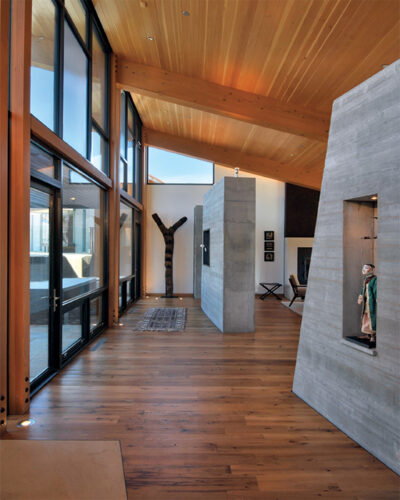
I came to CU for grad school, and I wanted to understand solar energy. I was kind of disappointed in CU’s program at that time. So, I didn’t pick up much there, but I picked up so much from my fellow students. We were all passionate solar hippies. We wanted to change the world, and we believed if we could get people to have more control of their own energy, then they would be less subject to the rule of petroleum and politics and corporate profit. We really thought we would be able to put a solar collector on every house and that was going to make a big difference.
I started my own practice as Sunflower, for the heliotropic nature of this flower that followed the sun—solar hippie stuff. From the get go, I was putting out there who we were.
Boulder was a place where new ideas were embraced. And we were convincing people, but we didn’t have to convince everybody. We had to just start building and keep consistent. We were this little boutique practice, but we were doing what we loved and we believed in, and we were researching and building things and finding out what worked and what didn’t, and we started to become the basis of a whole movement in green design.
How has your understanding of “living architecture” evolved as you moved from small projects to master planning entire communities?
That old sunflower was self-limiting, too. It got us so far, but then it was sort of suggesting that solar energy and solar architecture were all we were about. I wanted to operate at different scales, and I believed the human aspects of design also needed to be sustained. Architecture is about living. It’s about life. It’s about ecology. And so, part of it is the ecomorphic principles that I started to develop, looking at healthy organisms and saying, “okay, what can we learn from the patterns that are behind healthy organisms in the design of the human-interfaced world? Can we at least take those touchstones?” Mother Nature is the perfect designer, and there are things like scale and context and homeostasis and synergy that can be applied to architecture.
In our studio, it became a way we could challenge what we were doing—I mean, the ridiculousness of being green but designing an 8,000-square-foot house. We did it, so I’m not preaching from above. I would always push clients toward, are you sure you need that? But ultimately, as an architect, you’re not in control. You try to inform and show that you can do more with less. This idea of what is just enough, to me, is where we need to get to—getting both more responsible and more intelligent in our design. Living architecture is a part of all of that.
What are some of your favorite projects?
All the houses are like my children, and I love them all. They’re all different, and they’re all their own thing, and they’re all perfectly imperfect. I love going back and hearing the stories about people loving living there all these years. What they really remember is that those projects, in terms of living architecture, put them in a better position to relate either to one another or to the natural world around them.
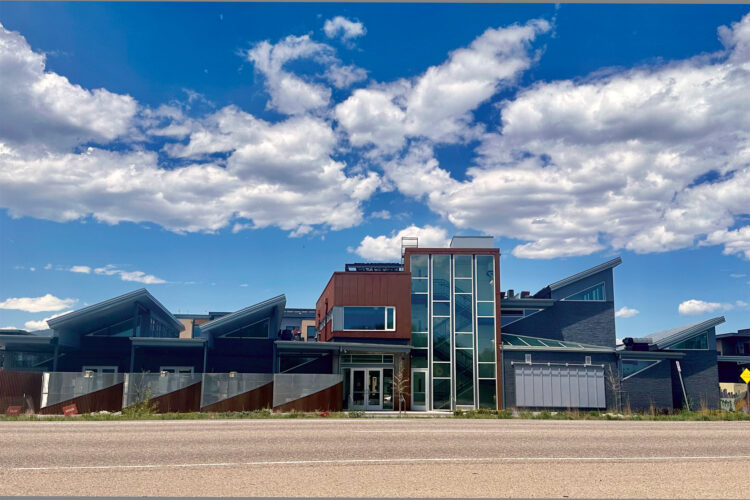
But the projects I feel best about are things like the Eagle Rock School, where for over thirty years, kids have been able to come there and they’ve been changed. Then, after that, the Abbey of Saint Walburga—to be able to do a Benedictine monastery in this modern world with a bunch of sisters who allowed me to revisit my early Catholicism that I had rejected. And then more recently, the Groundworks Arts Facility Lab that we just completed. When I’m dead, it’s going to still be there, a place where young people and old people and people working at Google and people who work in their heads all the time can work with their hands, doing either pottery or steel forging or woodwork or glass or print.
You have influenced generations of students through your visiting lectures at CU Denver. How does working with younger designers tell you the field is changing?
I just presented to the incoming freshmen of the CU Environmental Design program. I was so impressed with them and the questions they asked and their level of really being engaged. They seem to be excited about doing something in the world right now. I think there’s a lot of young people who are ahead of the rest of us in terms of how important it is to grab hold of this whole climate disaster. We’re not getting leadership, and they want to contribute to that. That’s why they’re in environmental design.
For print-exclusive stories, download the digital magazine or pick up a copy from select local King Soopers, Safeway, Tattered Cover, or Barnes & Noble locations.