If you can dig a hole, you can plant bulbs. And if you feel like getting a little fancy, “there are bulb tools that help you dig the right depth for each type of bulb,” says Amber Rossi, manager at Hilltop Gardens in Westminster.
You’ll have to wait through winter to see the fruits of your labor, but when they pop up in your garden and reward you with bright spring color, it will be worth the wait.
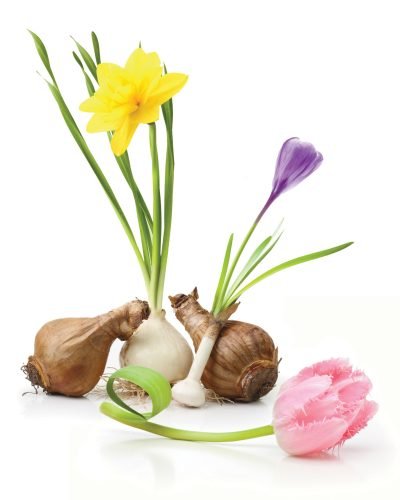
Tips and tricks for planting fall bulbs in Colorado:
Start with healthy bulbs.
Avoid bulbs that are mushy and moldy or papery thin and lightweight. Purchase bulbs early for best selection, then store in a cool, dry place in their original package or a paper bag (never plastic) until you’re ready to plant.
Mix and match for nonstop spring color.
Decide whether you prefer a cluster of different flowers in the same color, the same flower in different colors, or a variety. Bulbs bloom at different times—there are early, midseason, and late tulip varieties, for instance, while dahlias tend to bloom later—so you can stagger varieties for continuous blooming throughout the spring.
Plant when soil is chilly, not frozen.
The best time is when the soil has started to cool down but hasn’t frozen yet. Bulbs need time to root adequately before the ground freezes, but soil that is too warm can damage the flower. In Colorado, bulbs are usually planted in late September or early October. “When the leaves start changing colors and falling off the trees, that’s a good indicator of when it’s time to plant bulbs,” says Rossi.
Find the perfect spot.
Choose a spot where they’ll get adequate sunlight, but be aware that they may emerge too early and be at risk for freezing in an area with southern exposure. For a natural look, simply toss them close to where you want them, then plant them where they land. Rossi suggests making a map or graph of where you planted your bulbs and keeping note of what grew well (or not) in those areas, then using that as a guide for the following fall.
Tuck them in for a long winter nap.
Most bulbs come with planting instructions, which usually advise planting them at a depth four times the height of the bulb. Plant them with the tip facing up, though if they get turned upside down, they’ll figure it out. “They’re very resilient,” says Rossi, “so don’t stress too much.” If the soil is too clay-like, it can be amended with sphagnum peat moss or compost. After the ground freezes, cover the area with 3 inches of mulch to help prevent a freeze-thaw-freeze cycle that can damage the bulbs. Water once a month throughout the winter unless it’s a particularly wet season.
For print-exclusive stories, download the digital magazine or pick up a copy from select local King Soopers, Safeway, Tattered Cover, or Barnes & Noble locations.