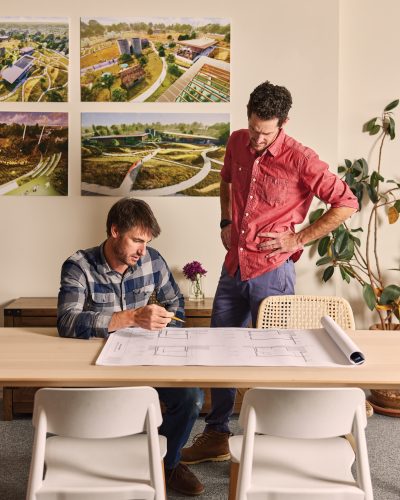
Morgan Law and Steve Scribner, founders of Shape Architecture, are introducing Coloradans to the benefits of healthy, efficient homes through Passive House design. In addition to designing homes throughout the state, Shape pioneered Colorado’s first multifamily Passivhaus certified project in Englewood. Last year, when AIA Colorado named Shape the Young Firm of the Year, the award committee stated, “Shape always strives to use practice as a mechanism for positive change by fusing great design with a high level of sustainability and resiliency.”
What inspired you to specialize in high-performance, sustainable design?
Morgan: I was doing some construction before going to architecture school and learning about how buildings were such a big portion of global carbon emissions and thought that architecture was one way to address this large carbon footprint. I went to graduate school at the University of Oregon, where sustainable design was the main focus. Through my education, I learned all about the fundamentals of high-performance buildings from some of the nation’s leading experts. My thesis project involved a lot of research into the underlying principles of some of the new building standards like Passivhaus and the Living Building Challenge. This focus was balanced with a passion for Pacific Northwest design and its connection to materiality and site.

Steve: I grew up in a 160-year-old house on a big property with a huge garden. My parents were connected to the land and were very frugal and resourceful with a very intentional lifestyle. As an undergrad, I was a physics major. I didn’t know what I wanted to do, but I found architecture towards the end of college. I got a job working for a high-end architect in Telluride doing large projects on beautiful sites, but they felt unnecessarily large and were used infrequently. These houses were built well, but no matter how sustainable they were, they took up a lot of materials, resources, and energy. It really bothered me, and when I found the Passive House standard, it just clicked. It brought everything together in terms of how I could make a positive impact.
Both of you are certified Passive House Designers. How does that influence your design philosophy?
Steve: The reasons we came into architecture and do what we do are already driven by sustainable interests and values. But I think it does impact how we approach design in terms of baking in the really basic stuff like window orientation, insulation, and detailing airtight homes with continuous (filtered) fresh-air ventilation. These strategies are just part of our thinking.
Morgan: Our design process stems from climate characteristics and how the architecture works within the context of that specific site. This equates to good design in terms of shading and crossventilation cooling and passive heating. It’s building science, not a checklist. So, what that means is really durable, low-energy houses that are healthy and resilient and acoustically comfortable and naturally daylit. Those are the reasons our clients come to us.
How do you balance aesthetics with functionality and sustainability in your projects?
Morgan: We’re always trying to find that balance. A lot of the time it involves getting 80 percent of the way there utilizing all the low-hanging fruit that we’ve learned from doing a handful of certified projects. And then combining that with the fact that a lot of our houses are in rural Colorado, and it’s amazing outside two-thirds of the year. We really value that connection to the landscape and indoor-outdoor living.
What are some other projects that reflect Shape Architecture’s philosophy and aesthetic?
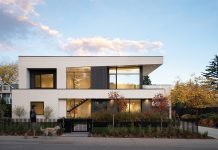
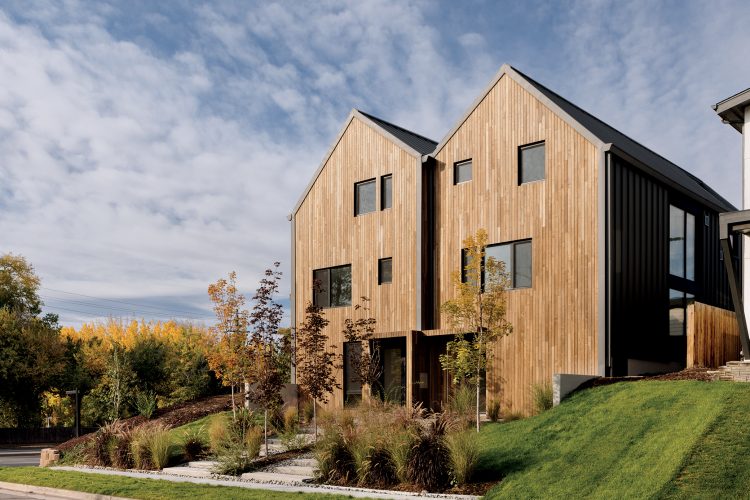
Steve: We did a Marshall Fire rebuild on a small lot in Louisville, and we designed specifically to make the most compact building footprint with a high-performance envelope. The owner sent me a graph of how much energy is being used to heat the house, and they are heating the house 95 percent of the time with their body heat and the sunshine. The aesthetics of this house were a direct result of the context. There were several hundred “modern farmhouses” being constructed in every direction. We wanted to reference that but subtly show that this is not your typical suburban home. Large windows and doors that connect directly to outdoor space make this house feel much bigger than it is.
How has the demand for sustainable and energy-efficient buildings evolved in Colorado?
Morgan: There’s been a lot of momentum around the state over the last eight years. Groups like the Colorado Green Building Guild and the Passive House Rocky Mountain Chapter have done a lot to advocate and educate our communities about the benefits of green building. The devastating Marshall Fire created incentives from Excel to rebuild to the Passive House standard. Denver is thinking about an alternative pathway to achieve energy compliance through the Passive House standard. There’s also a passionate group of builders across the state who are making high-performance building happen.
Steve: We have carved out a niche, and there are enough people around the state who are excited about it, but it’s important that the momentum continues to grow. I think if people really understood the health benefits, there would be no question. People will spend more money to have their kids never get asthma. There is still a perception that it’s a niche for the ultra-hippies, but we feel that we are changing that stereotype one building at a time.
What advice do you have for aspiring architects who hope to make a meaningful impact through their designs?
Morgan: Work for a firm that you believe is doing powerful, impactful work. Send us your resume!
Steve: If you work towards what you really believe in, you end up getting to work with people who align with your passions, and the movement gets stronger. One of the best things about our work is that our clients come to us for the same reasons that we exist. So, all of our projects become much more collaborative, rewarding, and enjoyable.