For Collin Parson, art has always been a way of life. The son of a sculptor and a modern dancer, he grew up immersed in Denver’s creative community. Today, much of his artistic practice explores the interplay of light, material, and perception. It’s a fitting focus for someone who, as director of galleries and curator at the Arvada Center for the Arts and Humanities, also shines a light on Colorado’s artists. Here, he discusses his creative process, his approach to curation, and the role the Arvada Center plays in supporting the state’s vibrant arts scene.
How did growing up in a family of artists shape your path as an artist and curator?
I grew up in my dad’s studio—he was always out there welding, grinding, drawing. My mom was a dancer. My siblings are creative, too. Being around this all the time was just part of everyday life. I didn’t really question it. Someone asked me recently when I realized I wasn’t in a “normal” family, and I said I never really did.
Now I see that influence in how I approach things, especially with my own kids. I built a studio in my backyard, and they see me out there making all the time. It’s not always art—it’s just making. And I think that’s important.
Can you tell us about your artistic practice? How did it take shape?
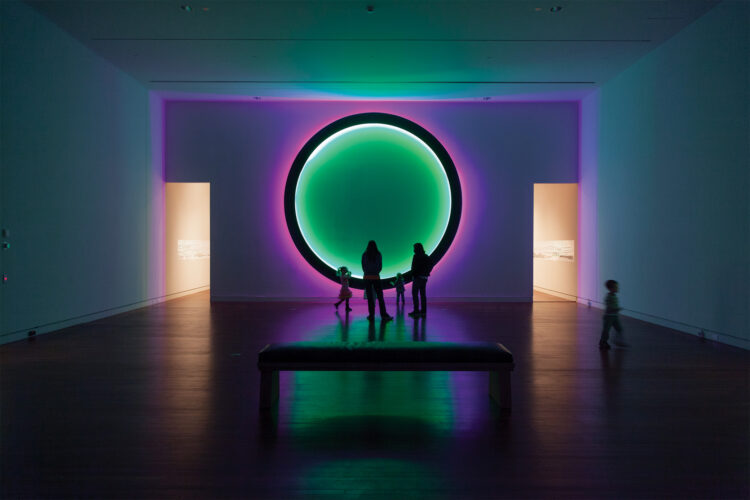
I consider myself connected to the Light and Space movement. Much of my work explores the interplay of light, material, and perception. I got my BFA in theater design from CU Boulder, where I built a strong foundation in how manipulating light shapes environments. I remember my theater adviser often pushed me toward traditional design projects, but in my senior year, he told me, “You go be the artist—you’re good. I’ll give you your degree, and you go do what you want to do.” That freedom was pivotal in shaping my artistic path.
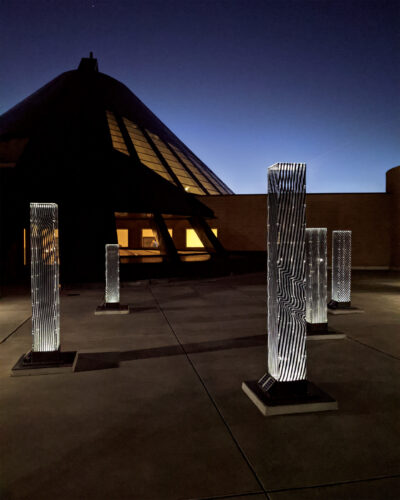
A huge turning point came when I saw a James Turrell installation in Indianapolis— it completely changed my understanding of what art could be. Early on, I began making light-based work, but it was complicated: you needed controlled environments and a lot of equipment. So I started experimenting with ways to work with light through materials—mirrors, acrylic, and reflection— which opened up new possibilities.
I’ve always been drawn to working at a large scale, creating installations and public art that transform a space and immerse viewers in the experience. Today, I still love experimenting and pushing ideas further— it’s the process itself that continues to guide and inspire my work.
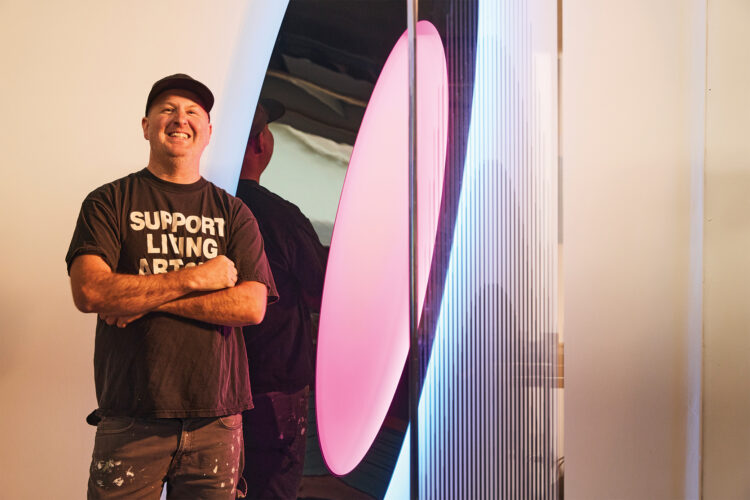
Can you talk about the Arvada Center and your journey to becoming director of galleries and curator?
The Arvada Center is unique because it merges community engagement with professional artistic programming. It houses galleries, theater, dance, music, and education programs— all under one roof—so it serves as both a cultural hub for the community and a professional platform for artists. We do a lot here, and I’m really proud to be part of it.
My journey with the Center was gradual and organic. In 2004, my dad had an exhibit here, and he called me—I was finishing up undergrad— and asked if I could help him install the show. The gallery director at the time hired me as an art installer, and I slowly worked my way up through the organization. Along the way, I returned to school and earned my master’s in arts administration, which helped formalize my understanding of running an arts organization.
I’ve been here more than twenty years now, and the community is wonderful. It’s exciting to be part of such a supportive and vibrant group of people.
What do you look for when selecting work for an exhibition?
The Colorado art scene has grown tremendously. The internet and social media have given artists more visibility, but the local community has always been strong. Artists choose Colorado for the environment, the support network, and the scene has become more interconnected.
I look for a combination of professionalism and creativity. Artists who are open, communicative, and thoughtful about their work immediately stand out. Studio visits are huge for me because seeing work in the context of an artist’s life and practice tells you so much.
I’m also very intentional about how a show is experienced. Often, I’ll think about each room differently— one space might be immersive and sensory, another quieter and more reflective. Pairing emerging artists with established ones is important, too; it creates dialogue across generations.
What advice would you give emerging artists trying to build a sustainable career today?
Make opportunities and take opportunities. If someone offers you a chance— even if it’s small or outside your comfort zone—do it. And if nobody’s knocking on your door, create your own platform. Join co-ops, organize pop-up shows, experiment.
Deadlines—even self-imposed ones— can also help artists keep moving forward and showing up to the studio.
What does it mean to support living artists today?
Supporting living artists is about more than purchasing work—though that’s wonderful if you can. It’s also about attending openings, giving feedback, engaging in conversation, and acknowledging the effort and creativity that go into making a work of art.
For print-exclusive stories, download the digital magazine or pick up a copy from select local King Soopers, Safeway, Tattered Cover, or Barnes & Noble locations.