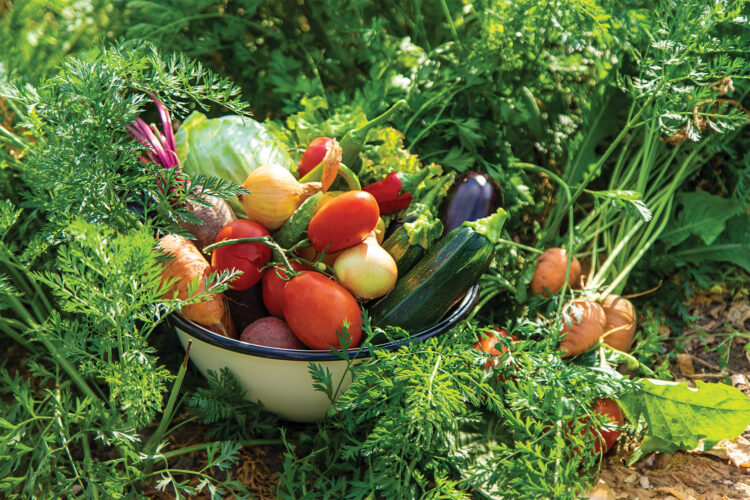
Don’t let the name fool you. City Floral, which recently celebrated its 115th anniversary, cultivates much more than flowers. General Manager Trela Phelps says the greenhouse grows dozens of vegetable varieties: fifty-five tomatoes, forty peppers, a dozen bean and cabbage varieties, ten carrots, twenty-five cucumbers and fifteen varieties of eggplants and lettuces. “That’s just what we grow,” Phelps said. “We also buy from other growers.”
Phelps, who has been City Floral’s general manager for 37 years, offered the following advice for growing and harvesting edible crops.
Use shade cloth and bug cloth to protect your plants. Shade cloth protects plants from Colorado’s scalding sun. Bug cloth protects plants from pests such as Japanese beetles and grasshoppers, which have been more prevalent in recent years.
Prune foliage with yellow or brown coloration. “With cold-crops—things like chard and spinach—you can get damage from leaf miners, an insect that requires you to remove any leaves affected,” Phelps says. “After hail, prune any damaged leaves because the cuts and tears can expose plants to insects or diseases.”
Pruning is most effective on tomatoes because they take longer to ripen. “If you have a tomato that needs ninety days or it’s a plant with larger fruit, pruning can make way for more sunlight,” Phelps says. “If pruning tomatoes, cut the suckers that grow in the V-shape between the stem and the main leaf. This pruning will let in more light and space for more air movement.”
Leave fruits and vegetables on plants as long as possible. “The longer you leave fruits and vegetables on the plants, the better they taste and the more nutrition they have,” says Phelps. She advises harvesting beets once they’re the size of a tennis ball and says the longer you leave carrots in the soil, the larger they’ll get. Harvest corn after the tassels have shriveled up and browned and pick winter squash when stems are brown and hard. Cucumbers should be fully developed and round, not pointed, at the tip. Wait until tomatoes are evenly colored all around.
Use pruners or garden shears to avoid damaging plants while harvesting. “When plants are really developed and ready to pick, you can give a twist and the fruit will come off, but using a sharp tool will avoid ripping the vine,” she says. “Insects and pathogens like powdery mildew will take advantage of that opening.”
For print-exclusive stories, download the digital magazine or pick up a copy from select local King Soopers, Safeway, Tattered Cover, or Barnes & Noble locations.