Photo courtesy of Follow Architecture.
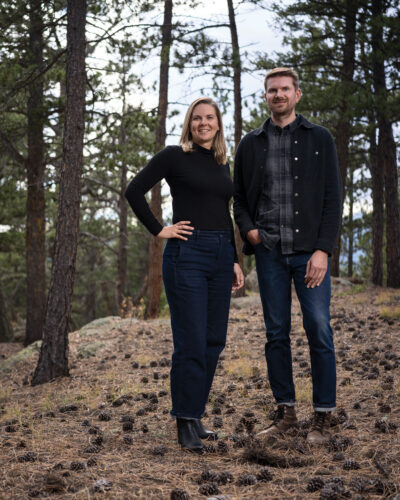
Andrea and Colin Ostman founded Loveland-based Follow Architecture in 2018, four years after they hiked the Pacific Crest Trail, which winds through the Sierra Nevada and Cascade mountain ranges. The experience instilled in them a reverence for nature, simplicity and connecting with the subtleties of a home’s surroundings. We had this conversation with Colin just days after the couple’s first child was born.
The Pacific Coast Trail is a pivotal moment in your narrative. How did it affect the way you see a building site? Spending that much time outside and immersed in the landscape and in the environment, you’re forced to create an understanding of it. Even just practically— choosing where to set up a tent, you’re thinking about where the weather is coming from, where the wind’s coming from, is there going to be morning sun blasting you? It’s very basic, breaking it down in the most simple form.
After spending five months outside, we realized how happy and content that makes you. We had twenty-pound backpacks with everything we owned in them. We essentially had nothing but food and shelter. And it was probably the happiest time of my life. We get caught up, especially with designing fancy luxury homes, in all of this stuff that really isn’t that important. A very simple shelter that allows you to experience the environment, nature, allows you to live a very fulfilled life. Our dream is to introduce that to our clients. We want them to go from thinking of a house as a normal house to thinking of a house as, how can it help me or be the vehicle to allow me to experience nature around me?
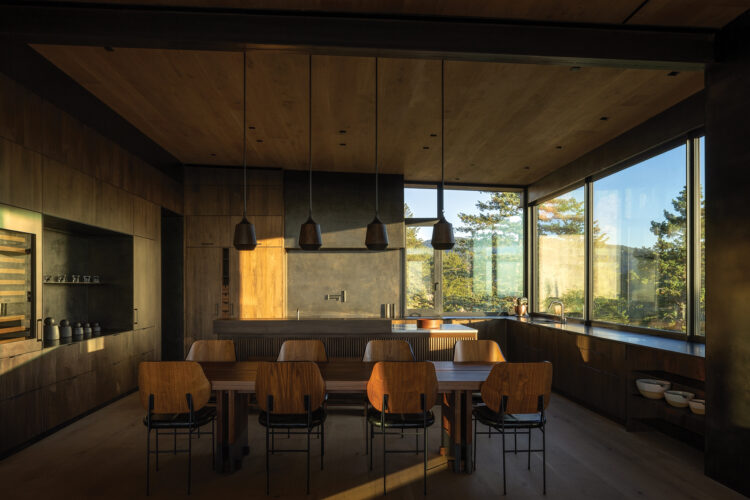
Photo courtesy of Follow Architecture.
What shifted in your thinking on the trail that you could not have learned in a studio or on a job site? In architecture and in design right now, it’s super trendy to talk about designing for place and environmentally focused, sustainable stuff. Actually living in the environment and actually experiencing that allows you to gain that understanding. It’s very easy to take a site plan and start diagramming where the sun and wind and sound and all that’s coming from. Everyone in architecture school does that. But to start having a deeper understanding of how it actually feels in this certain area of the site? You can only learn that by spending a lot of time there. And throughout all the seasons, you start to gain a deeper understanding of the place.
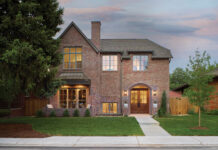
Can you talk about creating a sense of immersion in nature when your projects are sitting closer to other homes? Every site, even if it’s in the middle of downtown Denver, has some sort of natural element that you could tie to the architecture. That could be as simple as a strategically placed skylight that brings light in and casts it down a wall a certain way, just moments that allow you to stop and pause and realize there’s beautiful lighting here. We also really like using courtyards, where you wall off an outdoor room that’s outside, but it also feels like an interior space because it’s sheltered from the dense urban environment around it. It allows you to have a little piece of nature there.
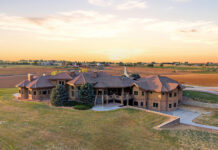
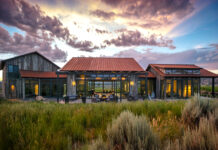
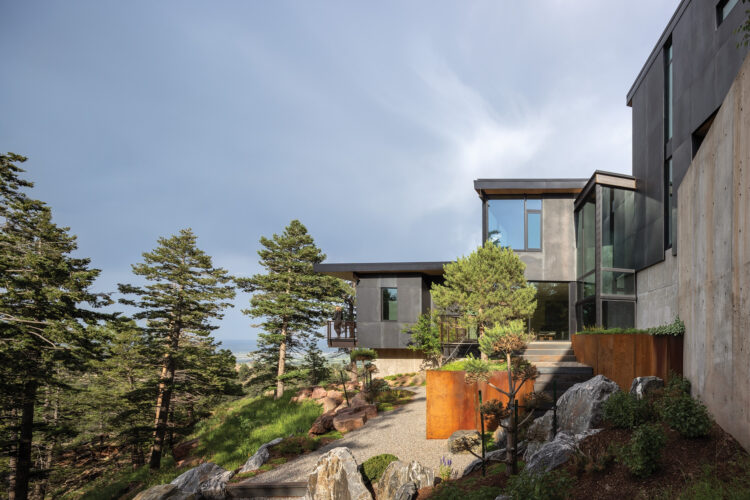
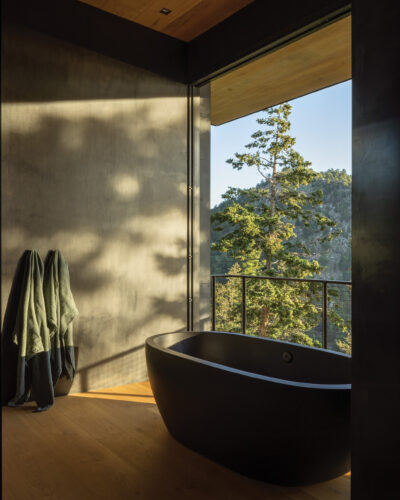
You talk about homes resting gently in the landscape. Is that primarily visual, or is it something you feel when you walk through the finished building? With architecture now, there are a lot of cool, big, open, modern houses that are sort of a one-trick pony. You have the same view from all the spaces, but I think it’s more interesting to be more nuanced about it. Like if the living room has this big primary view, maybe the master bathroom could have a more secondary view of a small outcropping or a pine tree. We are more focused on trying to disappear into the landscape with simple forms that aren’t trying to compete with what the super dramatic landscape is already doing.
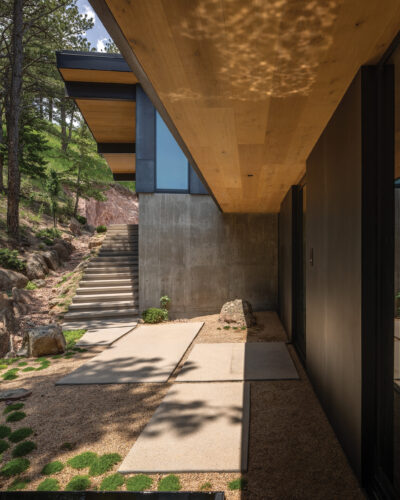
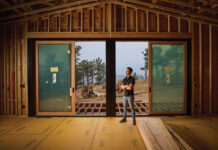
That’s the visual way of looking at it. There is a more experiential way of thinking about it. For instance, our High View House, when we first walked that site, there was an animal trail that wound down a ridge line that was very dramatic with big outcroppings. And this trail weaved through those outcroppings in a way that wasn’t fighting the landscape, it was going with it. It was very in tune with what was happening there. So, that became the concept of the project. We wanted to mask the project in a way that weaved through those outcroppings and preserved them but also allowed the interior spaces to live with them. When you’re in that building, you have really far-off views from this superdramatic ridge line of mountains or the plains. But then you also have really closeup views of dramatic cliffs right outside the window. We wanted to mimic this idea of walking down a trail. There’s spaces that are tucked away, that are darker and then lighter, and you weave in and out, and then you get into some main spaces and it reveals huge views out to the plains. It creates this maze-like experience through the house.
For print-exclusive stories, download the digital magazine or pick up a copy from select local King Soopers, Safeway, Tattered Cover, or Barnes & Noble locations.