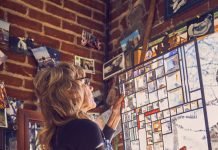
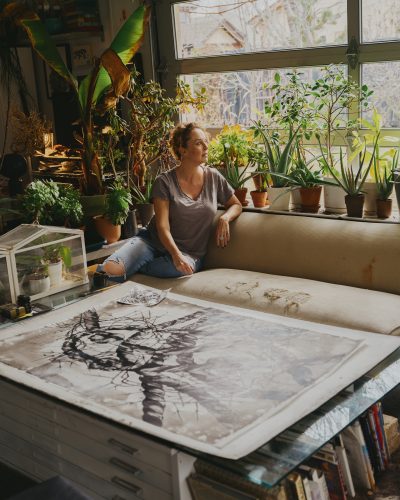
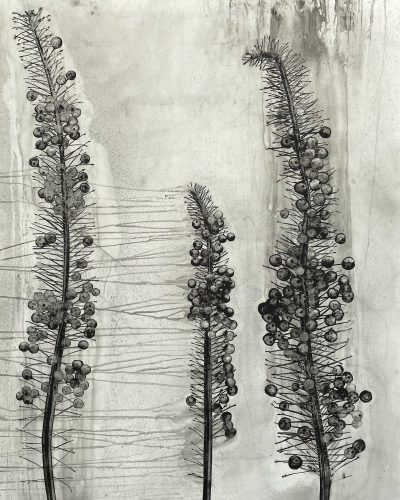
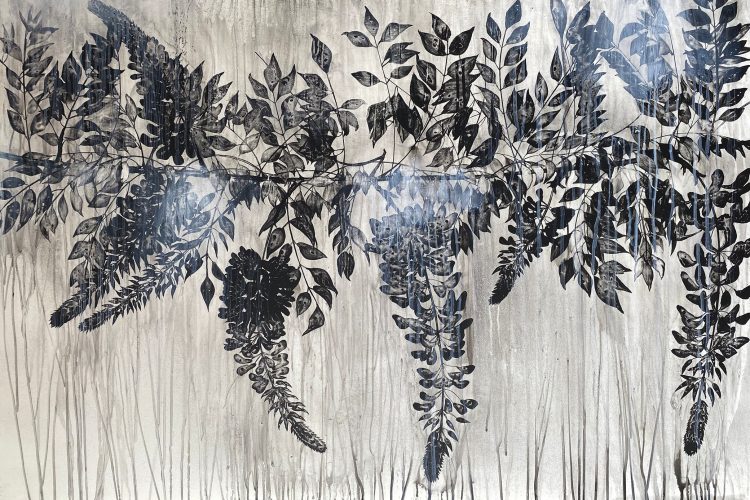
Heidi Jung’s Denver home, studio, and garden amalgamate her primary creative passions: interior design, art, and plants. In 1997, the artist bought her grandmother’s 1946 brick bungalow in Berkeley and gutted it for a total remodel. Known for her large-scale, black-and-white botanical paintings, Jung paints with Chinese and Japanese calligraphy ink and charcoal. A friend once described her art as “dark girly,” but the artist says she is, in fact, fairly happy-go-lucky.
What do you most vividly remember about growing up in your grandmother’s house?
The basement was all knotty pine. It had a bar and was the hub for our whole big Irish-Catholic family. My mom grew up in the house since she was nine. The best factoid is that the house is near the old Elitch’s, and before hotels were available, in the ’40s and ’50s, the stars stayed with people in the neighborhood. I have a photograph of Grace Kelly signed to the family because she stayed here in the basement apartment.
You completely renovated the house to create your artistic haven. How did you make your grandmother’s home your own?
My mom suggested—rather than popping the top or expanding and putting an addition on—to keep the house the same size and make every part of it special. I spent money on great tile, hardwood flooring, special lighting, and hot water heat with all the returns recessed. We raised ceilings and took out load-bearing walls and reconfigured a staircase. Every single thing in the house is different.

With your training as an artist, you bring a highly refined eye to your own environment. When you remodeled your house, did you work with a designer or did you follow your own vision?
Starting in 2000, I worked in various showrooms at the Denver Design Center in jobs that allowed me to work around creative people and learn a lot but also to have time to paint. In 2008, when I worked on my house, I called in every favor from the design world to purchase products. I got beautiful imported carved teak doors from Thailand and Ann Sacks tiles, for example.
And in 2011, you added a studio with a south-facing glass garage door that opens to your garden, which seems ideal because plants serve as your primary subject matter. When did you first dig into gardening?
My grandmother was an amazing gardener, but I grew up in the foothills by Lookout Mountain, so we didn’t have the ability to garden. There’s no growing season, and every rabbit or deer eats the plants. When I bought this house, I started officing from home, so my time was more fluid. I was traveling to London quite a bit, where they have beautiful gardens, and I fell in love with this TV show, Gardener’s World, which has about fifty seasons. I sank my teeth into gardening very heavily during the pandemic. I have an espaliered apple tree I love and a wisteria that is part of the family. I have olive trees and citrus trees in pots, lots of cacti and succulents. In the winter, it’s like a botanic garden in here.
In a nutshell, what is your process for your botanical art?
I make the pieces with Sumi ink and charcoal on Mylar that I paint on a flat surface and then let dry for several weeks. Then I work with water and sandpaper to remove bits of ink. They look photo-based, and people assume they are photographic.
The black-and-white works seem versatile enough to fit in any decor, but what are some of your best art installation tips?
In my home, I have a very muted palette throughout the whole house, and I let my art be the color. But most people want color incorporated, so my black-and-white works fit into interiors. If people do want more color, I suggest painting the wall. If someone loves coral pink, that would look great behind my black-and-white art.
Also, I have more art than I have walls. Get comfortable with rotating your art collection and putting things away for a while, under the bed or in a closet. Every other year or so, rotate things.
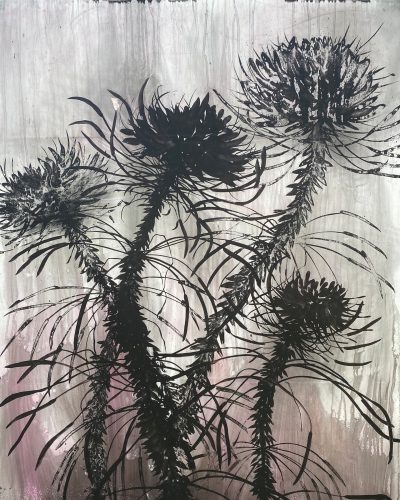
You’re disciplined about limiting your palette, which creates a classic sophistication. Are you ever tempted by color?
The black-and-white can be more emotional and moody. The nature of black-and-white pieces is that they leave a lot more up to visitors to get their own take on the piece.
Your body of work has a wonderful, recognizable harmony and simplicity that seems to make sense both aesthetically and pragmatically. You’re painting on Mylar, mounting on board, and leaving your works—most of which measure 60-inches by 40-inches—unframed, which seems genius. You’ve eliminated the significant added cost of framing large pieces. And without glass, your large artworks weigh less and don’t throw reflections.
Yes, and glass is expensive and can break in shipping. A frame can add another element, but I like art that can be hung on the wall without a frame.
Do you accept commissions to paint pieces for specific spaces?
Yes. Some artists get peevish about being asked to work with certain colors or in a certain atmosphere, but to me, it’s a challenge I enjoy.
To see more of Heidi Jung’s work, visit her website or the William Havu Gallery.